

About six months ago, I posted a short message on LinkedIn with a few references from MIT, stating that AI would become our most important customer. Not only was the prediction very accurate, but it is also becoming increasingly important to prioritize our digital presence in preparation for the new customer segment (Agentic AI).
Agentic AI systems from OpenAI1, Google2, and Perplexity3 can already:
Search across the entire web
Compare pricing and product attributes
Add items to shopping carts
Apply discount codes
Verify the checkout flow
And even place orders automatically
All from a single prompt.
Amazon has already issued cease-and-desist notices4 to prevent autonomous agents from placing orders on its platform. That alone should signal how quickly this new customer class is emerging.
Why This Matters (Porter’s Five Forces View)
Through Michael Porter’s Five Forces Framework5 lens, two forces spike immediately:
1. Buyer Power = Extremely High
Agentic AI has no emotional connection or loyalty to brands, can conduct thousands of searches concurrently, and has no fatigue.
It seems the Agentic AI optimizes shopping for transparency, accuracy, speed, and price.
2. Threat of Substitute = Extremely High
If product content, price, and other important product information aren’t accessible to AI Agents, they will automatically route to a competitor who is.
We are entering a new era in digital history where our new buyer is fully rational and fully automated.
Two Strategic Opportunities To Prioritize
I’d like to propose two ideas to not only plan for the upcoming disruption, but also to leverage them to stay ahead of the competition.
1. Model Context Protocol (MCP)
The best and concise explanation of MCP6 is to think of it as the USB-C port for AI. In other words, all modern electronic devices utilize a single standard USB-C port for charging and connecting to external devices. An organization can utilize MCP to establish a digital USB-C connection, enabling its customers’ AI agents to communicate with their marketing and e-commerce sites, learn from them, and transact.
Think of MCP as a standard interface that lets AI agents:
Navigate our website
Read our marketing content, product catalog, return and warranty policy, etc.
Validate pricing
Place orders directly
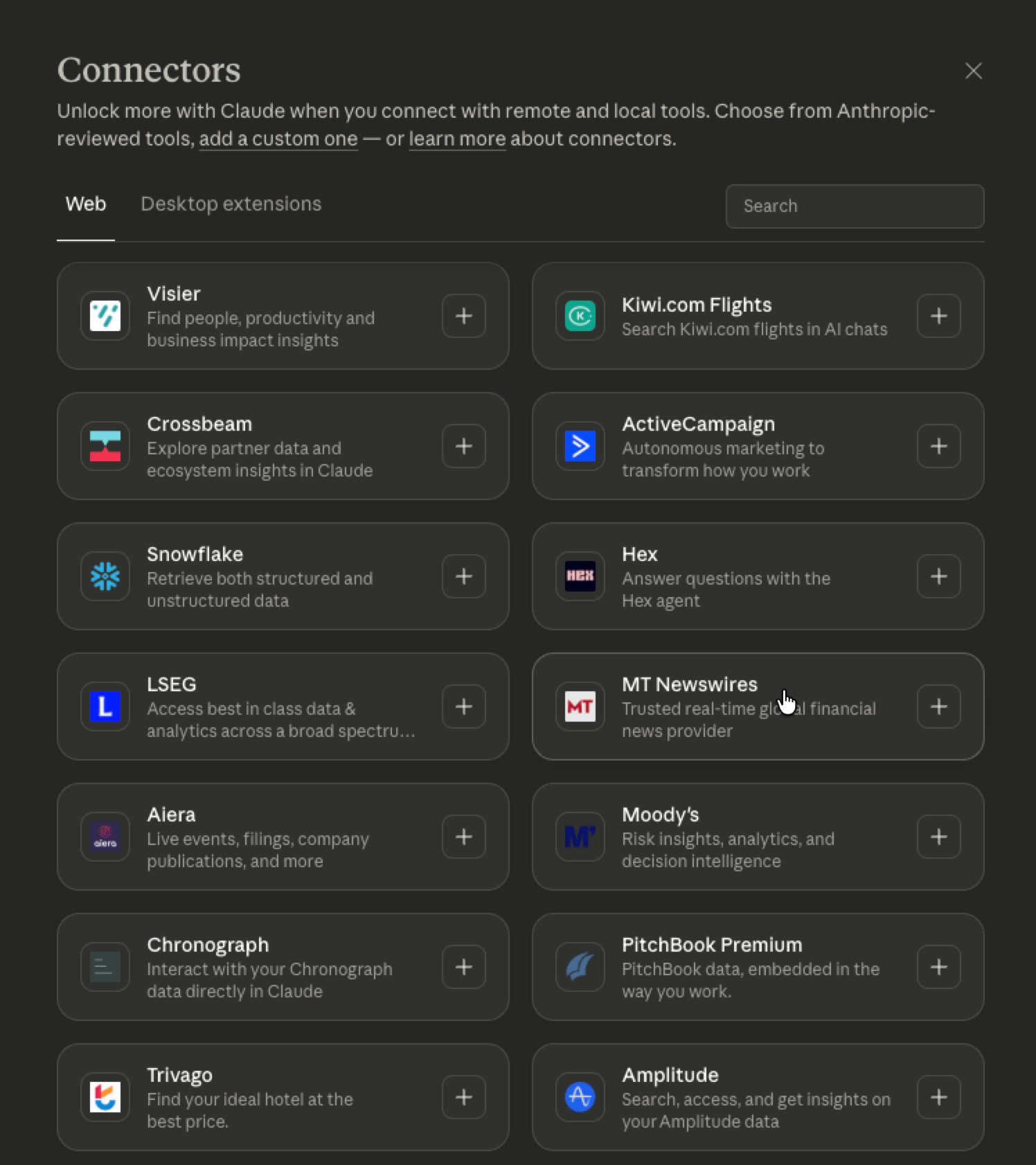
OpenAI, Anthropic, Google, and others enable the addition of MCP tools with a single checkbox. As I reflect on the MCP evolution over the past few months, the Claude Desktop app, for example, has undergone significant improvements, adding the MCP connection from updating the JSON file to now simply checking a box to add a new MCP.
Why is this urgent?
If competitors expose MCP endpoints before we do, their products become instantly more discoverable and more agent-friendly.
2. Conversion Rate Optimization (CRO) strategy for AgenticAI
For 20+ years, the CRO initiative7 remained focused on human behavior:
UX/UI improvements
A/B testing
Navigation optimizations (new customers vs. existing customers)
Mobile responsiveness
Frictionless customer experience, especially during the checkout process
Trust signals such as reviews, return policy, and warranty claims
While we are still researching to truly identify what AI Agents prioritize, my hypothesis suggests that they don’t care about branding, layouts, colors, or emotions. Instead, AI agents prioritize:
Clean, structured product data
Schema markup
Clear pricing logic
Error-free APIs (i.e., shipping rates, credit card transactions, etc)
Fast response time, page load time
Machine-navigable flows
Transparent policies
Assuming my hypothesis holds water, this shifts CRO from Human Experience Optimization to Machine Reasoning Optimization.
In that case, here are some natural questions that we need to unpack:
Can an AI agent parse our product data without hallucinating?
Are our company policies machine-readable?
Can the checkout process be executed autonomously?
Is our product catalog structured enough for an AI agent to compare SKUs at scale?
The Bottom Line
To my fellow technology leaders: Just as Agentic AI is redefining digital transactions, we can utilize the same technology to disrupt ourselves and our organizations before our competitors do so proactively. This is the moment to combine our technical expertise with business ownership and create solutions that materially strengthen our organization’s competitive positioning.
1. Build Prototype
Use AI Agent to rapidly prototype
MCP connection
Agent-driven checkout flow simulations to identify gaps
Structured product data tool to test if a Product Information Management (PIM) makes sense for your business. If so, build the business case for it.
Automated SKU comparisons and pricing audits
Demo your prototype to your leadership, sales, and marketing teams, showing them what the future looks like before anyone asks for it.
2. Use AI to Become Fluent in the Business Side
As AI democratizes access to the technology, why don’t we use AI to democratize access to the business world and differentiate our ability to:
Understand commercial strategy
Translate customer pain points into technical opportunities
Communicate solutions in business terms (not technology vocabularies)
Connect technology decisions to revenue, customer retention, and margins
Please share your thoughts, and let’s learn from one another and drive this next wave of innovation together.
https://openai.com/index/buy-it-in-chatgpt/
https://blog.google/products/shopping/agentic-checkout-holiday-ai-shopping/
https://www.perplexity.ai/hub/blog/shop-like-a-pro
https://www.perplexity.ai/hub/blog/bullying-is-not-innovation
https://hbr.org/2008/01/the-five-competitive-forces-that-shape-strategy
https://www.anthropic.com/news/model-context-protocol
https://www.optimizely.com/optimization-glossary/conversion-rate-optimization/
Lots of great insights here! I would even go so far as to say that CRO best practices for human behavior overlap significantly with AI. Almost everything you list in the AI priorities are also priorities for humans - fast load times, structured data, clear logic, etc. I might even make the counterpoint that as we reward "agents" for acting on our behalf (i.e. performing human tasks), even things like lifestyle and brand traits that are attractive to people who prioritize quality over price will become signals used by AI to perform tasks optimally (in addition to reviews). Over time, I predict that what becomes most important for AI is what is most important for the people using it, and anyone who ignore this will be taking a huge risk. Incredibly interesting topic.